

Leadership Blind Spots
Our shadow sides grow in our blind spots.
360 Coaching offers depth work on leadership blind spots to reclaim the gifts of your reactive tendencies.
Blind spots are usually at the root of faltering leadership.
The hitch is leadership blind spots originate in our strengths and old storylines.
As leaders grow and conditions change, those patterns can start to limit effectiveness. Execution slows. Trust erodes. Innovation stalls.
If changing behavior were simple, it would already be done. But without understanding how a strength turns into a roadblock, leaders tend to repeat the same patterns, especially under pressure.
Why dig deep? Just change the behavior.
If only behavior change were that simple.
The CEO says to the COO, “Stop micromanaging your directors.”
The COO says, “Okay.”
Problem solved. Right?
If only.
Until the leader understands how a strength turns into a roadblock, the behavior tends to persist.
This is why leaders can sincerely commit to “doing it differently”, yet continue to repeat the same patterns when they are under pressure.
There is some old logic driving that irritating habit. That old logic says the leader is at risk of something. And, that logic has to be unrooted to rewire the reactivity and eradicate the behavior.
Helping leaders
uncover the patterns that
get them stuck
and build awareness that
keeps them moving.
Coaching + Wisdom + Experience
Most coaches bring frameworks which are great. They provide roadmaps.
But each leader's starting point is unique and determined by their mindset. Their personal path is shaped by their blind spots.
You need a coach with the depth to work there.
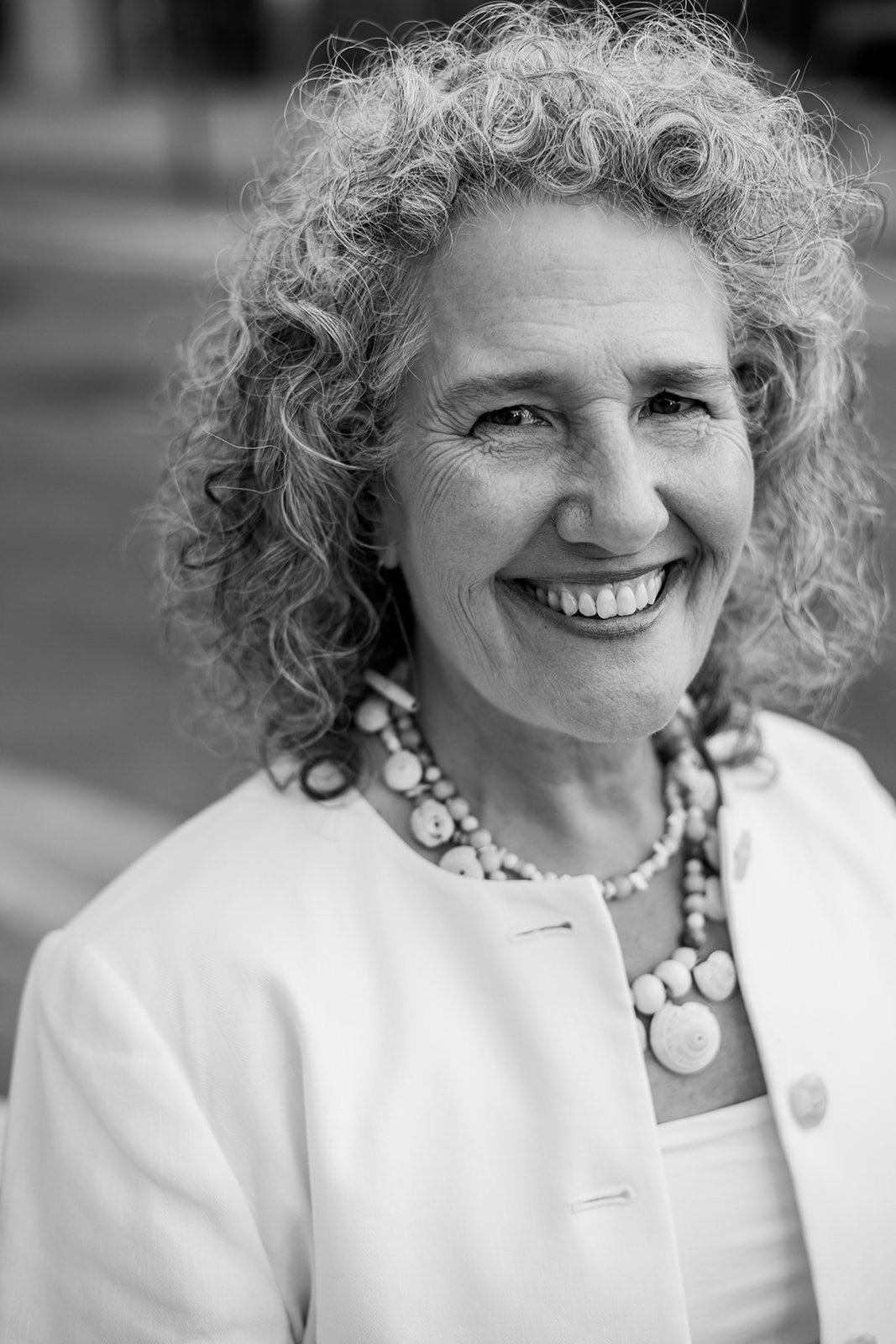
After 25 years as a therapist supporting high-performing professionals in Austin, Texas, I have that depth. With expertise in interpersonal dynamics and personal growth, I’m trained to quickly identify patterns and their underlying drivers.
As an entrepreneur, I’ve built a multi-million dollar company. I led teams, weathered conflict, navigated overnight pivots, scaled in a frenzy and survived an acquisition.
I’ve been in your seat and I’ve come out wiser on the other side.
Today, as an executive coach in Austin, I work with leaders facing the same pressures I did. Growth, complexity, fast-paced change and heavy responsibility at scale.
I’ve got you covered on the human side AND the business side of leadership blind spots.
Expertise in the human side of business
As people advance in their careers, fewer of their challenges are about expertise — more of them are internal.
That's why I say professional growth is personal work.
Leadership effectiveness is shaped by patterns of thinking, relating, and responding. As career growth progresses, a leader's impact is often limited not by a lack of skill or effort but by leadership blind spots.
Defining Leadership Blind Spots
Blind spots are the stories and belief systems underpinning old survival moves. They turn our strengths into liabilities.
For example, maybe you learned to be eternally agreeable in order to avoid upsetting your parents. And, being agreeable not only helped at home, it won you friends, the affection of your teachers, the respect of your teammates. Agreeableness became a big strength.
Now, you use agreeableness to make things happen in the world, but you no longer see the origin story. And, you don't notice when you're using it as a protective strategy. It has become a leadership blind spot.
You might use your agreeable nature to soothe a frustrated customer. Effective strength to leverage!
On the other hand, you might use it in a passive way. Like with a disruptive team member because your old, unconscious storyline says “keep the peace at all costs!” Now your strength just became a liability for your team.
To avoid this trap, you need to understand your backstories. You need to bring clarity to your blind spots to be able to steer clear of protective mode.
Uncover Your Blind Spots
Improve Your Leadership

Strengths & Leadership Blind Spots
Aren’t strengths always valuable?
When they are leveraged under stress, they can flip to a liability.
Let’s explore some scenarios.
-
A founder’s high standards, which built an impeccable product, flips into perfectionism when she is under pressure. Stress often breeds defensiveness and a protective mode. What is her strengthnow becomes controlling and undermines the work her colleagues are doing.
Once the founder gets this feedback, she needs to explore the blind spot. What old, fearful belief systems are getting triggered? How are my high standards getting morphed into a controlling defense mechanism?
Once she understands that her old story line that tells her “it’s all up to me” is causing her to become overbearing, she can rewire this habit. She can practice maintaining her high standards while also providing support and development to her team.
-
A manager’s people-pleasing style usually garners collaboration. People like being on his team because he’s nice. But that people-pleasing part can turn into protective passivity when the manager gets scared of falling out of favor. Now his people-pleasing ways are showing up as passivity. The passivity is undermining execution. This blind spot keeps him from achieving meaningful outcomes.
With helpful feedback from a 360 review, he begins to explore his old fear of being shunned. He realizes that is an old storyline from school days and doesn’t apply anymore. Now that he consciously affirms that he no longer needs to be so scare of being shunned, he learns to lean into his relationship strengths. With newfound confidence and illuminated blind spots, he practices clearer communication and boundaries.
-
A teammate’s composure is highly valued. She is cool, calm and collected whenever things go wrong. But when the boss wants to conduct a post mortem on a project that wasn’t completed on time, her composure turns to emotional distance.
She has an old story — this kind of discussion always ends in a big scary fight. So, she pulls back and doesn’t participate. Why isn’t she talking? What is she hiding? Now her teammates are wary. Trust is weakened.
When she gets this feedback in a 360 review, she is confused. How can both be true? How can she rate high on composure but also be untrustworthy? When her coach helps her dig deeper, she finds clarity on this defense mechanism.
Realizing that the danger of a big fight was real when she was going up, but hasn’t replayed at work, her blind spot is now in focus. She learns to lean into her strength of composure to engage courageous conversations during post mortem meetings.
When a coach is working with problematic behaviors, they need to get to the origin stories underneath. They need to illuminate the blind spots lurking within the strengths.
The arc of these backstories has to do with protection. Logic forms around internal conclusions—often made early—about what must be CONTROLLED, AVOIDED, or MANAGED in order to stay SAFE, EFFECTIVE, or VALUED.
When one of these feels at stake, that internal logic activates automatically, without conscious awareness.
The blind spot is the unexamined inner reasoning that makes a behavior feel justified, required, or unavoidable.
Bringing understanding and focus to that logic is the key to changing the behavior. Work with an Austin-based seasoned therapist for this deep dive.
Working with Blind Spots
Where ➛ Why ➛ How
Where They Come From
Blind spots usually develop early as intelligent adaptations to real demands—family dynamics, organizational culture, success pressures, or environments where certain ways of operating were rewarded.
Because these strategies were effective, they persisted. They became habitual. As this happens, the logic that generated the habit becomes invisible over time. The strategy sticks around long after conditions have changed.
That's how habits work.
Why They Matter
Blind spots don’t stay contained inside a leader. They shape the leader's belief system, ways of communicating, and behavior.
They impact relationships, decision-making, and trust across teams.
Left unexamined, they can:
distort how feedback is received or dismissed
slow execution and collaboration
undermine morale and psychological safety
stall leadership growth at critical inflection points
This is why capable, experienced leaders can feel “stuck” despite strong intentions and significant expertise.
How They Come Into View
Because blind spots operate outside conscious awareness, they cannot be reliably identified through self-reflection alone.
Blind spots become visible through examining patterns, especially patterns revealed by thoughtful feedback from the people most impacted by a leader’s behavior.
Structured 360 feedback, paired with skilled exploration and interpretation, illuminates the blind spots and brings them into focus.
Now the leader can work to retrain their internal storyline and free themselves from old habits that no longer serve them.
The fastest way to find your blind spots? Ask.
Blind spots aren't flaws — they’re totally human and totally normal. And, the only way to know what they are is to have someone point them out.
It all starts with feedback.
Because we don't know what we don't know, gathering objective outside observations paired with experienced coaching is crucial. That's how your blind spots will be revealed and come into focus.
360 Coaching uses powerful 360° assessments, including the Collective Leadership Assessment™ and Leadership Circle Profile™, to help leaders — in Austin, across Central Texas, and remotely — identify hidden patterns, build emotional intelligence, and align behavior with strategic objectives.
For many of us, asking for honest feedback is a lot like asking for directions.
It takes courage because somehow we have gotten the message that we shouldn’t ask for help or seek others’ perspectives.
Even when we take that leap, the feedback or advice may not be helpful anyway.
Gathering meaningful feedback is all about asking the right questions and being open to integrating it with your own wisdom. 360 Coaching starts with validated 360 Leadership Circle assessments.
Discovery calls welcome.
No fee, no pressure.
With 360 Coaching, Austin and central Texas leaders uncover their blind spots and increase their capacity to guide, influence, and inspire.
Explore our executive coaching, leadership blind spots assessment, 360-degree reviews, team assessments, and leadership coaching services.
Frequently Asked Questions
-
Leadership blind spots are unseen internal beliefs, assumptions, or protective strategies that shape how a leader thinks, relates, and behaves—without conscious awareness. They often originate early, work well for a time, and then quietly limit effectiveness as leadership demands increase.
-
Blind spots typically show up through patterns rather than single incidents. Common signals include repeated communication breakdowns, defensiveness under pressure, stalled decision-making, avoidance of conflict, micromanagement, or teams that disengage despite strong leadership intentions.
-
Blind spots operate outside conscious awareness by definition. Leaders can often see the behavior, but not the internal logic driving it. Self-reflection helps, but it rarely reveals blind spots on its own. Patterns observed by others are usually required to bring blind spots into focus.
-
Blind spots come into view by examining consistent patterns in how a leader impacts others—especially through thoughtful, structured feedback from colleagues, direct reports, and stakeholders. When this feedback is explored carefully, the internal drivers behind habitual behaviors become clear.
-
No. Blind spots are human and normal. They form as intelligent adaptations to real demands. The problem isn’t that they exist—it’s that they often go unexamined long after circumstances have changed.
-
As leaders advance, fewer challenges are technical. Influence, judgment, emotional regulation, and relational impact matter more. At this level, blind spots have wider consequences—affecting culture, execution, trust, and retention.
-
Behavior change focuses on what to do differently. Blind-spot work focuses on why a behavior exists in the first place. Without addressing the internal logic driving a behavior, change tends to be temporary—especially under stress.