

Leadership Development Coaching in Austin, Texas
Full Circle Outcomes with 360 Coaching
Leadership challenges are familiar.
With leadership development coaching, the outcomes are impressive.
Leadership development in Austin helps leaders and teams navigate growth, misalignment, and the complex challenges that come with real organizational change.
When things at work start to fall apart, the instinct is to fix what's visible. Reorganize a team, rework a plan, restructure a process. But without changes in leadership behavior, those fixes rarely hold.
360 Coaching works with leaders and teams across Austin and Central Texas who are navigating real-world complexity.
The high-potential leader creating friction on an otherwise strong team. The founder who built something great and is now the bottleneck to what's next. The VP who's technically excellent and interpersonally costly. Growth, change, misalignment, and the human dynamics that come with them.
You're not looking for a standardized program. You're looking for someone you'll trust with a person you care about getting right.

Your organization has challenges. We have solutions.
-
"We've already outgrown last month's plan."
That's what the CEO said as she stared at the latest org chart barely recognizing it. Departments had tripled in size. Two key directors were juggling roles they hadn't expected to take on. Meetings kept multiplying, while accountability quietly slipped.
Everyone was sprinting. No one felt like they were moving forward.
What used to be quick hallway check-ins had turned into back-to-back meetings. Ownership was unclear. Decisions slowed. Leaders were reacting instead of guiding — and the larger mission was getting lost in the daily scramble.
Growth hadn't failed. Leadership capacity just hadn't caught up yet.
Leadership development at this stage isn't about damage control. It's about giving leaders the clarity, adaptability, and alignment they need to guide others through complexity — without burning out or losing momentum.
Roles clarify. Decision rights become explicit. Leaders learn how to delegate authority without losing accountability. The organization regains traction — even as complexity increases.
-
"We have the right people — but nothing is moving forward."
The founder couldn't make sense of it. Everyone showed up. Everyone cared. But progress stalled. Hard decisions were deferred. People agreed in meetings then didn't follow through.
Deadlines slipped. Energy dipped. Meetings dragged.
Eventually, someone named what had been hovering just beneath the surface. They didn't trust each other enough to disagree.
The team wasn't broken. They were stuck in safety mode and avoiding tension, minimizing friction, and carrying their own frustrations in silence. It was costing them momentum.
With the right training and support, that shifted. Real conversations started happening. Priorities sharpened. Agreements held. People stopped walking on eggshells and started stepping up.
They didn't just work better. They worked braver.
When leadership development focuses on team effectiveness, the shift is tangible. Leaders learn how to bring forward issues without triggering defensiveness. Teams practice making decisions together and sticking to them. Accountability becomes shared instead of avoided. Meetings get shorter. Decisions stick. Momentum returns.
-
"I just don't think it's worth it anymore."
That's what the high-potential team lead said over coffee with a friend. She liked the work. She believed in the mission.
But her manager was burned out and reactive. Feedback felt like criticism. Growth conversations never happened.
She was tired of pretending everything was fine. Tired of bracing for tension. Tired of feeling unseen.
So when a recruiter called with a role that paid a little less? She didn't hesitate. They offered real support and room to grow.
Good salary. Decent benefits. Career advancement. It used to be enough. Not anymore.
Today's workforce is asking deeper questions: Does my manager see me as a whole person? Do I feel safe speaking up? Am I supported, challenged, and developed — or just used up?
When the answer is no, people don't just disengage. They leave. Most people don't leave jobs. They leave leaders who lack emotional awareness, who shut down hard conversations, who don't know how to build trust, create safety, or coach growth.
Leadership development changes retention by changing the daily experience of work. Leaders learn how to give feedback that empowers rather than diminishes. Growth conversations happen before frustration turns into resignation. Retention improves when leadership grows — not when perks increase.
-
"Who is my replacement?"
The head of operations paused when she asked the question. If she stepped away tomorrow, no one was fully ready to step in. Her managers were excellent individual contributors. Smart, driven, and respected, but they struggled to delegate, coach, or think strategically.
Promotions weren't sticking. Some leaders were burning out. One had already left. "We keep rewarding performance," she said, "but we're not actually growing leaders."
You've got smart, capable people, but not enough of them are ready to lead. Strong individual contributors unsure how to lead others.
Mid-level leaders stuck in the day-to-day, without the space or skill to think strategically.
These aren't minor growing pains. They're early warning signs of a leadership pipeline problem. When leadership readiness lags behind organizational needs, promotions don't stick. High performers burn out. Succession planning stays theoretical. The burden quietly falls back on a few overextended leaders at the top.
Leadership development strengthens the pipeline by shifting people from high-performing doers to capable, confident leaders. Emerging leaders learn how to delegate, give feedback, and think beyond their own role. Over time, leadership becomes less dependent on a few individuals and more distributed across the organization — creating real bench strength, continuity, and confidence about what comes next.
-
"I'm working harder than ever — and making less impact."
The VP had built her career on results. Smart. Trusted. Tireless. But lately, things weren't clicking. Her calendar was full. Her inbox never cleared. And still, her team seemed confused and hesitant. She answered every question — yet nothing moved forward.
She had mastered the technical side. But leadership now required something different. Influence. Presence. Adaptability. She wasn't just responsible for outcomes anymore — she was shaping culture, guiding people, and navigating complexity. And no one had ever taught her how to do that.
Even highly capable leaders reach a point where effort no longer translates into influence, alignment, or results. Difficulty prioritizing or delegating strategically. Getting stuck in the weeds instead of leading from the balcony. Reactivity under pressure, especially when uncertainty spikes. Quiet self-doubt, despite years of success.
These aren't character flaws. They're patterns — habits that once worked but now limit impact.
Leadership development at this level creates a visible shift. Leaders move from doing more to influencing better. They gain clarity about where to focus, how to delegate authority without losing accountability, and how to lead through uncertainty. Decisions become cleaner. Communication lands. Teams respond with greater trust and follow-through.
→ Elevate the leaders your business depends on.
Let’s talk through the leadership challenges you’re facing.
The 360 Method for Leadership Development
From Frustration to Forward Motion
You don’t need another flavor-of-the-month leadership model.
You need clarity, structure, and support that actually shifts behavior in real leadership moments.
Discovery & Direction
360 Coaching starts with real conversations. Not assumptions.
What’s working? Where is momentum breaking down? What leadership patterns are helping, and which ones are quietly getting in the way?
Together, we clarify what success looks like now — and what needs to change to get there.

Assessment & Insight
Then we make the invisible visible.
Using trusted tools like the Leadership Circle Profile® and the Collective Leadership Assessment®, leaders gain clear insight into how they show up — under both normal conditions and stress.
This isn’t about judgment.
It’s about replacing guesswork with awareness, so leaders stop flying blind and start leading with intention.

Coaching & Real-World Development
Insight only matters if it changes behavior.
My background as a licensed clinician means I'm trained to see what's beneath the surface. I’m not focused just on the behavior, but on the blind spots creating it. That's what makes the development work lasting rather than cosmetic.
With a clear picture in place, development becomes practical and targeted.
That may include leadership coaching, focused team alignment, or executive coaching for senior teams.

Follow-Through & Integration
Real change doesn’t happen in a moment of insight. It happens with integration, experimentation, and practice.
We stay engaged as new leadership behaviors are practiced, reinforced, and integrated into day-to-day work — so growth translates into consistent action and measurable results.
Everything is grounded in real situations leaders are facing and designed to build habits that hold under pressure.
Because leadership transformation isn’t immediate, but it has to be deliberate.

Not sure where to begin? We’ll figure it out together.
Why 360 Coaching
Each of these scenarios points to the same leadership development outcome. Leaders who develop awareness, gain clarity, and practice new habits will begin to lead differently when the pressure is on.
When that shift happens, the outcomes compound.
Meetings get shorter. Decisions stick. Momentum returns.
Accountability becomes shared instead of avoided.
High performers stay and grow into the next role.
Culture strengthens because leadership strengthens.
Strategy stops stalling at the execution layer.
That's the return on leadership development when it's done right. And it's what I mean by the Full Circle.
-
This work is for leaders who have already proven themselves and are now operating at a higher level of complexity. They're smart, capable, and genuinely accountable to the people they lead.
But something has shifted. The role has expanded. The pressure has increased. And something is no longer working the way it used to.
There is a gap between how leaders are operating today and how they want to be functioning.
So, they look for some professional help to close that gap. They're not looking for someone who has simply studied leadership or thrown up a coaching shingle.
They're looking for someone who has depth and expertise. Someone who has lived the leadership journey and can bring that into the room with them. That’s why leaders choose 360 Coaching.
-
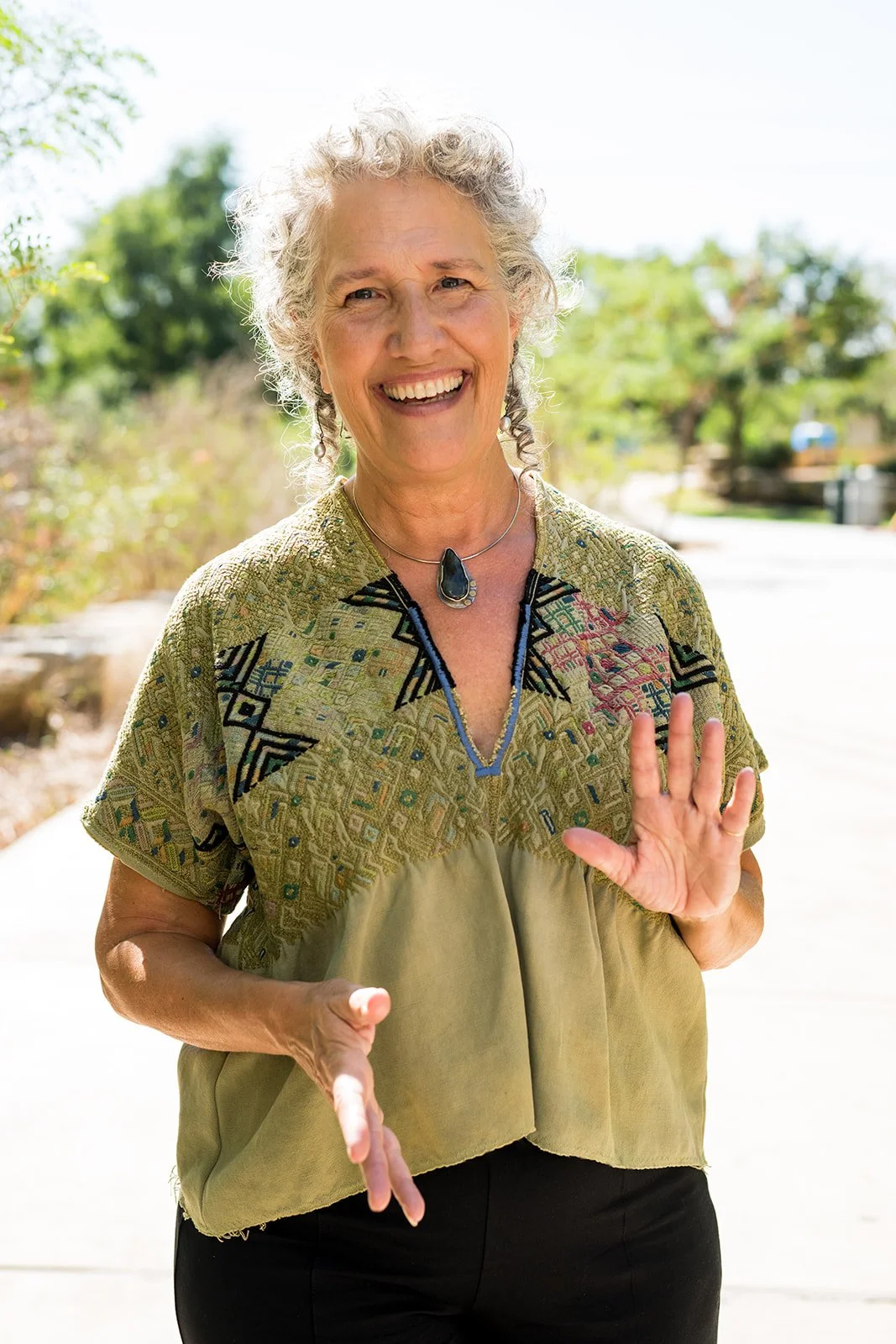
I’ve spent a career as a psychotherapist and more than a decade as a C-level founder scaling an agency from nothing to booming. My approach to coaching is deeply informed by my therapeutic expertise. My leadership development philosophy is driven by my leadership experience.
It matters how we show up. How we think, relate and respond as leaders determines the trajectory of the business and impacts everyone around us. As adults in this culture, we don’t spend a lot of time reflecting on our mindset. We are almost always focused on the doing instead of the way things are getting done.
I like the analogy of the IOS - internal operating system. Our IOS is our mindset that generates our thinking and relating patterns. Like all operating systems, our IOS becomes outdated over time.
That is what my approach to executive coaching is all about. Each person’s IOS was once effective. But time moves on, circumstances change, the IOS degrades, and things don’t run smoothly any more. We need to take some time to find the bugs and rework the processes.
Often, the patterns that are causing problems aren’t even in our awareness. They live in our blind spots.
To become more effective, we need a mindset upgrade. I take leaders through a proven change process.
-
This work combines the wisdom of human development with real business experience.
It’s not just an intellectual process.Leadership development is relational, behavioral, and often nonverbal. Because of that, I prefer in-person executive coaching whenever possible.
All engagements begin with feedback from the people working closest to the leader. I know the power of this phase. I’ve been through my own 360 assessment.
In my 360 feedback survey, many comments felt affirming. “It’s hard to find people in the corporate world who are so intelligent, steadfast and sure, and who come at everything they do with so much heart.”
Nice. It’s great to be seen in a positive light.
But other comments were eye-opening, to say the least. Learning that my high-standards often flipped into impatience was hard to acknowledge. And, understanding that the way I wield my confidence can constrict other people's contributions was honestly disheartening.
But, the truth is it was a gift to take all of that in.
Deep-diving into my shadow sides with a trusted coach took courage but it brought me new options. And having new options gave me a lot more breathing room to grow into my next level of leadership.
Who Leadership Development Is For
360 Coaching works with smart, capable people who’ve reached a point where they know something has to change, even if they can’t yet name exactly what or they don’t have the skill to facilitate it.
Most of the leadership development work I do is with small to mid-sized teams in Austin and Central Texas. Some are scaling quickly. Others are navigating transitions. Many are simply ready to stop repeating the same unproductive patterns.
This work is especially relevant when a team has outgrown its old ways of operating, but leadership hasn’t yet grown into what the moment now requires.
The founder who’s tired of being the bottleneck, but unsure how to step back without things falling apart.
The team with all the right skills, but none of the cohesion.
The technically brilliant VP stuck in reactive leadership patterns.
The group of rising directors who know how to run projects, but haven’t yet learned how to lead people
Want to talk through what’s getting in the way of effective leadership at your organization?

Ready to Grow?
If you've read this far, something is resonating.
Maybe you're carrying more than you should at the top. Maybe your team is working hard but not moving forward. Or maybe you know your leaders are capable of more.
And you're ready to invest in what helps them get there.
360 Coaching partners with organizations across Austin and Central Texas who are ready to grow leaders with intention. Whether that means executive leadership coaching, strengthening the leadership pipeline, or navigating growth without burning people out.
No pressure. No pitch. Just clarity about what's possible.