

Benefits of 360 Feedback for Leaders
Executive coaching with 360 feedback expands the perspective and the impact.
360 feedback for executives and teams aspiring to greater effectiveness, cohesion and performance.
360 Feedback Jumpstarts Leadership Development
Limits of a First-Person View
As a counselor, I’ve spent literally thousands of hours behind closed doors listening deeply to my clients. Helping them untangle their stories, make meaning, and move forward.
It’s a powerful process but sometimes it’s slow. When clients have entrenched behavior patterns that aren’t visible to the client we refer to them as blind spots. As a therapist, without 360 feedback, those patterns can take months to surface..
Executive Coaching Expands the Frame
As a leadership consultant and executive coach, a whole new option opens up. I can deploy high-caliber 360 leadership assessments to gather feedback from multiple people who work closely with the leader. The results give me the broader 360 view, an immediate and dynamic snapshot of the leader’s blind spots, as well as their overall leadership effectiveness.
Awareness of the interplay between the leader’s blind spots and their current impact on the organization galvanizes the change process.
Ultimately, the 360 view jumpstarts leadership development in a way that counseling and first-person reporting can’t.
Wy Leadership Development Doesn’t Happen in Private
Leadership is the ability to guide, influence, and inspire others toward a shared goal. It shows up not just in vision or intention, but in daily behavior.
How decisions are made, how people are treated, and how pressure is handled when stakes are high.
Leadership development is the process of expanding that capacity over time. It’s not about learning a new management technique or adopting a different personality style.
It’s about increasing awareness, flexibility, and effectiveness. Responding thoughtfully instead of reactively. Aligning intention with impact. Leading in ways that build trust and momentum over time.
And because leadership is inherently relational, leadership development doesn’t happen in private. With the support of a professional, executives in leadership coaching update their ways of thinking, relating, and responding.
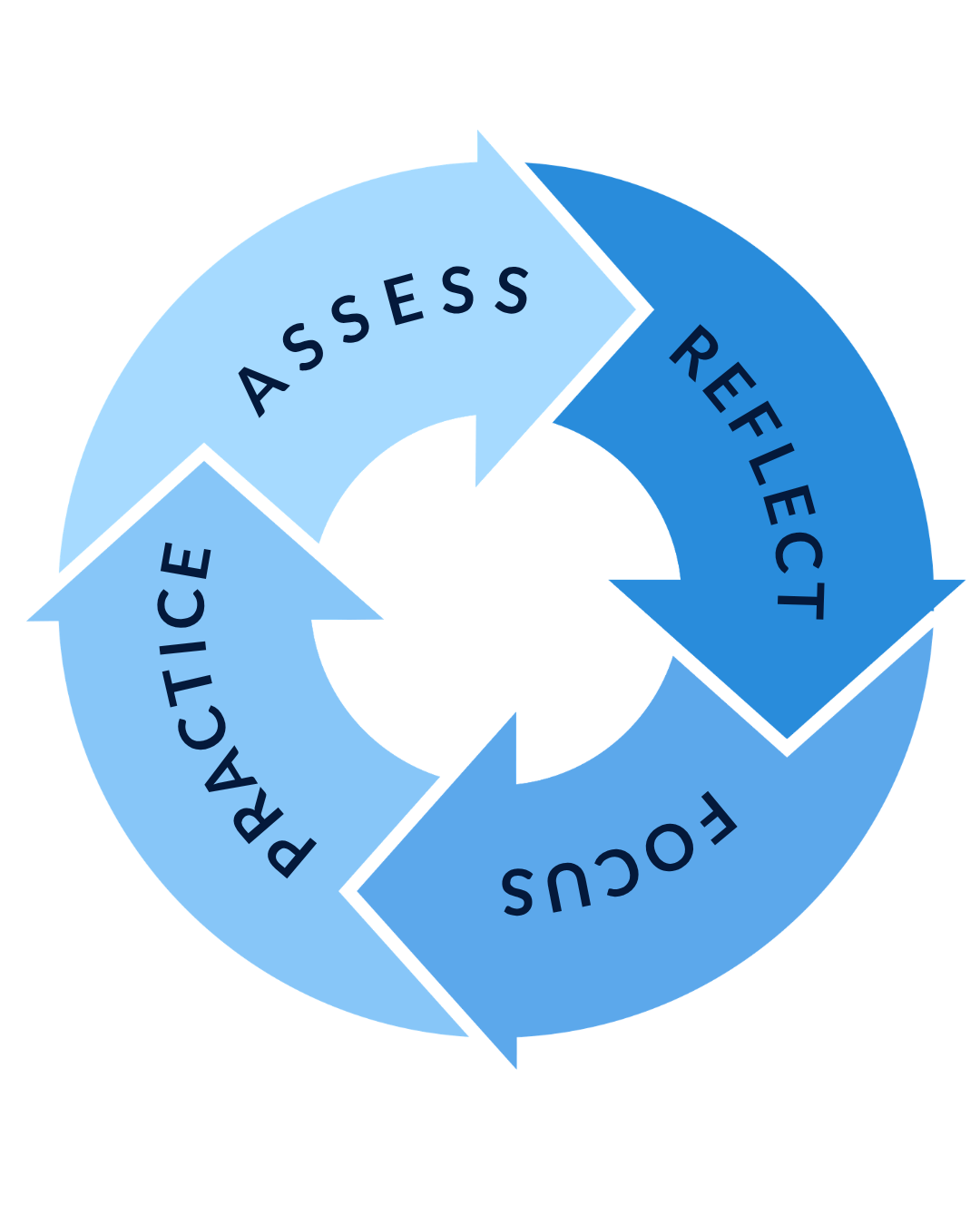
Why Development Without 360 Feedback Falls Short

Personal and professional development rely in great part on self-reflection. This perspective is important, but incomplete. When growth depends on a first-person perspective, important dynamics remain hidden.
Leaders can be well-intentioned, insightful, and hardworking and still unknowingly create friction or disengagement around them.
In counseling, I rarely get to see the moment someone swings and misses or freezes under pressure. I don’t see how they lead a meeting, how their tone shifts when challenged by a coworker, or how they respond to authority. I can’t witness how their stress ripples through the room each day.
I may hear about those moments, but only through the client’s own lens. Important but partial. It can be difficult to see how your own behavior is actually experienced by others, unless we ask them.
When blind spots persist in leaders they don’t just slow personal growth. They affect trust, decision-making, team engagement, and results.

How 360 Feedback Expands the View + Accelerates Growth
360 FEEDBACK CREATES A DIFFERENT VANTAGE POINT
A leader’s genuine intentions don’t predict their actual impact. To get a 360 view we incorporate the leader’s own perspective with qualitative and quantitative feedback from the people who work most closely with them.
How a leader shows up in meetings, conversations, and moments of stress is key to the change process. It brings a level of awareness the leader can’t achieve on their own. With it, we can focus on development goals that will genuinely move the needle in their leadership impact.
Now, we have a clear map from current impact to desired improvement.
Patterns emerge from 360 feedback:
Where leadership strengths are landing well
Where good intentions are missing the mark
Where stress, pressure, or blind spots undermine effectiveness
This data allows coaching to move faster and go deeper without guesswork. There may be defensiveness initially, but that’s where I leverage my counseling expertise.
From Insight to Behavior Change

360 feedback gives us data about actual behavior. From there, we draw out insights to illuminate fruitful paths for leadership development.
If insight alone were enough, we would all be sleeping eight hours a night, getting plenty of fresh air and movement, eating well, and spending lots of time with loved ones.
If insight were enough, leaders would be communicating well, collaborating effectively, maintaining their composure and their integrity. Even under pressure.
But, it takes more than insight to change our habits and patterns. We have to update our mindsets and practice new ways of relating and responding before our patterns begin to change. With insight, executive coaching guidance and the leader’s effort, we begin to see visible growth.
Colleagues see it in meetings and conversations, in hallway moments, and in the ways decisions are made. As leaders shift how they show up at work, those changes ripple outward into their teams, their organizations, their families, and their communities.
That’s how a 360 view leads to 360 growth.
That's the power of 360 feedback coaching. Grounded self-awareness paired with a process for expanding leadership capacity leads to practical, observable change in all areas of life. Austin leaders can find that at 360 Coaching.
WHY INSIGHT ALONE ISN’T ENOUGH
Curious what a 360 view would do for you?

Meet Your 360 View Guide
Founder Executive Coach Therapist Leadership Consultant
Ellen Lindsey, LCSW
Ellen was born in Austin, Texas and has lived there all her life. A licensed psychotherapist for over 25 years, she also brings decades of experience as entrepreneur, executive leader, and business professional.
She built a multi-million dollar agency and led it through growth, complexity, and acquisition. She understands firsthand what leadership demands when the stakes are high.
Business forward and grounded in psychological expertise
Warmth, clarity, and a straight-talking, no BS approach
Meeting leaders where they are to expand their capacity
Explore how Ellen + 360 Coaching might help you.
In person executive coaching available in Austin and Central Texas.
Email directly at: hello@executive360coaching.com
Frequently Asked Questions
-
To get beyond coaching frameworks and work in a personalized way with your unique mindset. Ellen Lindsey is a seasoned counselor who has training in leadership development and can bring a depth to your efforts that most coaches can’t.
-
It mostly comes down to training, legal scope, and breadth of development knowledge. Counselors are licensed and required to treat mental disorders. Coaches are not licensed and are restricted from mental health treatment. Because of the depth of the education and training required of professional counselors, they bring more experience in psychology and human development.
Read more about the differences between counseling and coaching here.
-
Blind spots are patterns in behavior that are visible to others but not to the individual. They persist because they were once effective and have become unexamined habits. As time passes and contexts change, the patterns lose their effectiveness but we can’t see it. Read more about blind spots on this page.
-
Feedback is gathered using one of our Leadership Circle assessments.
For individual assessments, the leader asks five to ten people to fill out the same anonymous survey. The results are compiled and presented in several ways to help the leader gain a broad understanding of their impact and their effectiveness.
For team assessments, the raters may be internal or external to the team.